
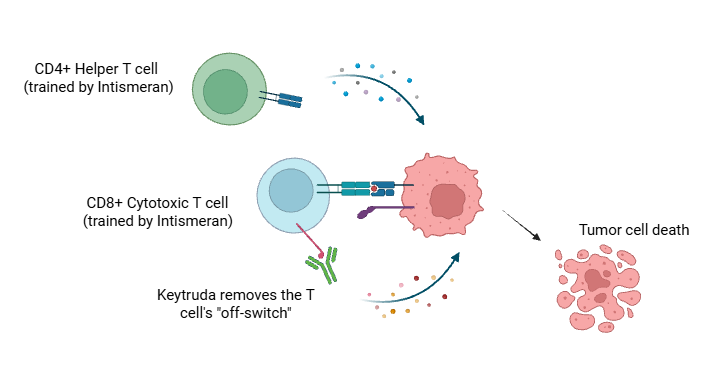
Melanoma is one of the most common and life-threatening types of cancer, affecting thousands of people every year. In 2024 alone, there were more than 58000 deaths as a result of melanoma. It is estimated that the number of new melanoma cases will increase further in the upcoming years, especially in younger age groups.
Melanoma: a hard-to-treat type of skin cancer
Melanoma is a type of skin cancer that develops from melanocytes, the cells that give us our skin color. People with fair skin are more likely to develop melanoma due to damage from sun exposure. If not caught early, melanoma can spread to other parts of the body and cause metastases that are harder to treat. The chance of survival after a melanoma diagnosis depends on many factors, but generally, the earlier the diagnosis, the better the chances of survival. There are now many options for treating melanoma, and in recent years, progress in immunotherapy has significantly improved survival rates.
Now, a new type of treatment, which was based on years of cancer vaccine research, offers new hope in the fight against this malignancy.
An individualized treatment against melanoma
According to an announcement released on August 19th 2026, two pharmaceutical companies, Merck and Moderna, developed an individualized therapeutic vaccine that trains the immune system to target each patient’s melanoma based on its unique characteristics. The vaccine had been under testing in clinical trials over the past couple of years and has recently completed a Phase III trial with very promising results. Researchers used this new vaccine, called Intismeran, in combination with an already approved immunotherapy drug, called Keytruda (developed by Merck).
The Phase III trial recruited patients who had been diagnosed with stage IIB to IV melanoma that had undergone surgical treatment to remove their tumor. These patients had not received any other form of anticancer treatment before. They were then randomized into two groups. One of them received the Intismeran/Keytruda combination, and the other (the placebo-control group) received only Keytruda. The Phase III trial revealed statistically significant improvements in recurrence-free survival and distant metastasis-free survival in patients who received both treatments. No detailed information is available yet, and we still don’t know much about the treatment’s effect on overall survival or potential side effects, as we await official publications. However, the results of the Phase II trial, which was completed years ago, are already available, highlighting the significant benefits of this combination treatment.
The plan behind Intismeran
It is important to note that Intismeran is not a preventive vaccine. It is not supposed to be given to healthy people to decrease the likelihood of them developing melanoma at some point in their lives. It is a therapeutic mRNA vaccine that can only be used in patients who have already been diagnosed with melanoma.
One thing to know to understand the vaccine’s purpose is that tumor cells carry mutations in their DNA. These mutations allow them to produce proteins that may not be present in normal cells. These proteins, known as neoantigens, can be presented on the surface of the tumor cells. Immune system cells can recognize these neoantigens and destroy the cancer cells. However, cancer cells often escape the immune cells. Thus, they survive, multiply, and increase the chances of cancer recurrence or metastasis. Intismeran aims to make the cancer cells more vulnerable to an immune system attack by targeting these neoantigens.
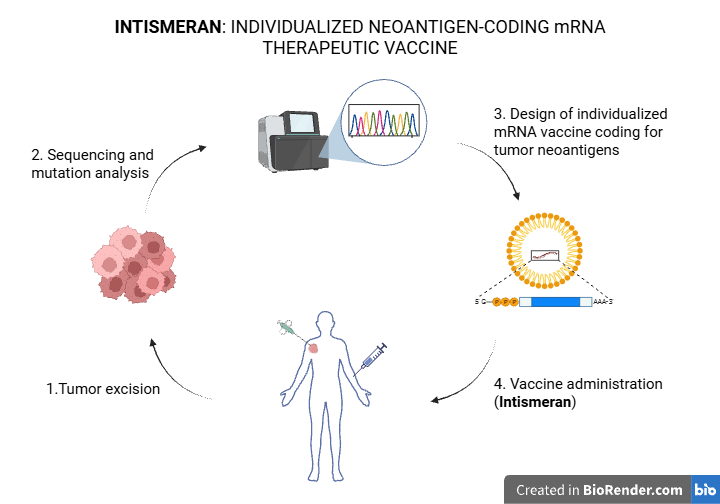
Intismeran is not one-size-fits-all. It is an individualized treatment, since each patient receives a personalized vaccine, depending on their tumor’s unique characteristics. After surgical removal of the tumor, a biopsy is sent to the lab. Through sequencing techniques, scientists identify the tumor’s mutations that would lead to neoantigen synthesis in these cancer cells. Afterwards, with the assistance of bioinformatics, they determine which of these neoantigens are more likely to be successfully targeted. This way, they create a synthetic mRNA molecule coding for up to 34 of these neoantigens. Once injected into the patient, the mRNA vaccine will train the immune system cells to recognize these neoantigens on the surface of the melanoma cells and attack them.
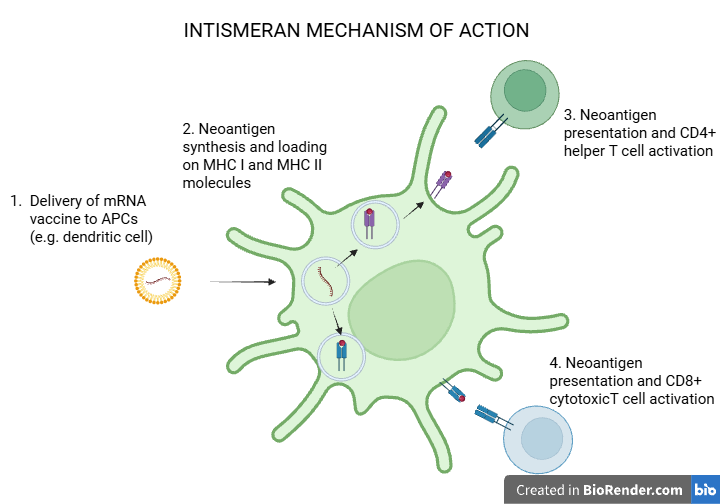
The vaccine, which consists of a lipid nanoparticle that protects the mRNA molecule, is injected into the patient. Once inside specific immune cells called Antigen-Presenting Cells (APCs), such as dendritic cells, the mRNA is released into the cytoplasm, where it uses the cell’s machinery to synthesize the proteins it codes for. These proteins are then cut and processed inside cell compartments.
- When these proteins are processed by the proteasome, the neoantigens that are produced are loaded onto MHC class I molecules and are presented on the cell surface. The MHC I-neoantigen complex can be recognized by the T cell receptor (TCR) of specific CD8+ cytotoxic T cells.
- When the proteins are processed by lysosomes, the neoantigens that are produced are loaded onto MHC class II molecules and are presented on the cell surface. The MHC II-neoantigen complex can be recognized by the TCR of specific CD4+ helper T cells.
Both the helper T cells and the cytotoxic T cells that are trained during this process can multiply and create identical copies that can locate and destroy melanoma cells that carry the specific neoantigens. Cytotoxic T cells are immune cells specialized in killing cancer cells. Helper T cells can release molecules that have a destructive effect on cancer cells or recruit other valuable immune cells (macrophages, natural killer cells, B cells) to assist in cancer cell killing. Therefore, the vaccine offers a multidimensional approach against melanoma since it activates both the adaptive and innate immunity mechanisms to minimize the chance of cancer cells escaping.
Combination of Intismeran and Keytruda
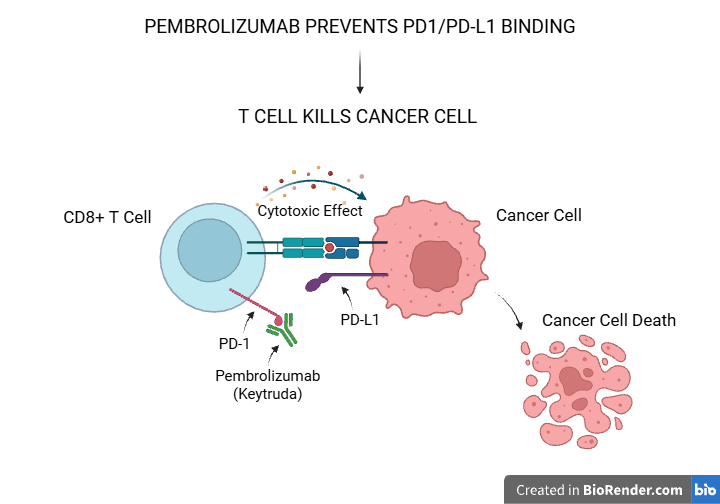
What’s more interesting is that the researchers didn’t use Intismeran alone in this clinical trial. As we said earlier, they delivered it in combination with an already approved immunotherapy, called Keytruda. Keytruda (also known as Pembrolizumab) has been used to treat melanoma, as well as other types of cancer, for a few years. It is an antibody that targets a molecule known as PD-1.
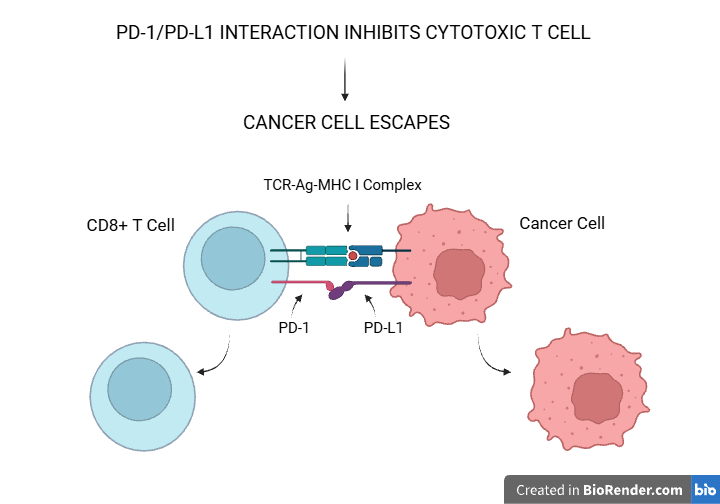
PD-1 is a transmembrane receptor on the T-cell surface that can be recognized by a ligand called PD-L1. Normally, PD-1/PD-L1 binding acts as an off-switch, which deactivates T cells. For example, during a viral infection, the body needs the PD-1/PD-L1 interaction to suppress the activated T cells that fight infected cells. So, the immune system normally uses this inhibitory signal to regulate its cells and protect healthy tissues.
However, many cancer cells also express PD-L1. As a result, cancer cells use the PD-1/PD-L1 interaction to inhibit T cells from destroying them. As a result, the cancer cells escape the immune system and survive.
The benefit of combining Intismeran and Keytruda
By combining the mechanisms of action of Intismeran and Keytruda, scientists train the immune cells to find the melanoma cells by taking advantage of their unique neoantigens. They don’t use a general approach irrespective of each tumor’s distinct features. Moreover, they inhibit the T cell’s off-switch that cancer cells can take advantage of to escape the immune system. Therefore, they offer both an individualized and a multidimensional approach to drive an immune system attack against the melanoma cells.
Keytruda is an antibody that binds to the PD-1 receptor of T cells. By binding to PD-1, it prevents the interaction between the T cell’s PD-1 and the cancer cell’s PD-L1 and prevents the inhibitory effect. The T cell remains active and is more likely to destroy the tumor cells.
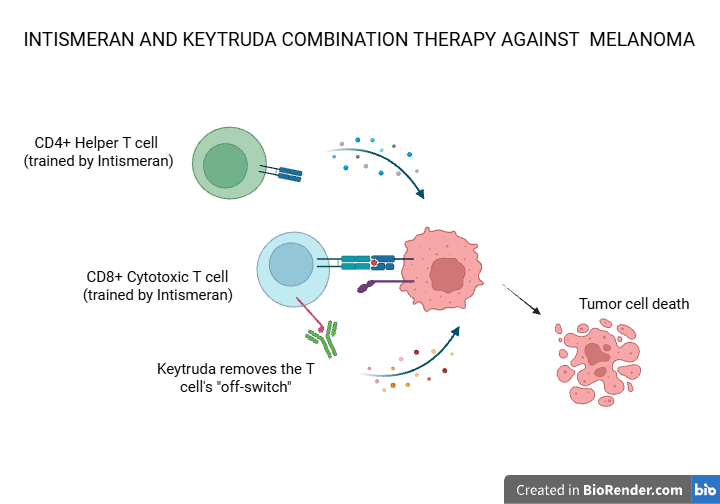
To sum up, the combination of Intismeran with Keytruda has the following effects:
- Intismeran trains T cells to locate and attack melanoma cells that carry neoantigens on their surface.
- Helper T cells directly target cancer cells, but also recruit other valuable immune cells against them.
- Specialized cytotoxic T cells exert their destructive effect and cause cancer cell death.
- Keytruda blocks the T cells’ PD-1 receptor. This way, the T cells retain their activation against cancer cells instead of being switched off by PD-L1.
These mechanisms enable multidimensional targeting of cancer cells, making it more difficult for them to escape and multiply. As a result, they reduce the risk of recurrence or metastasis after surgery.
What we know so far and what the next steps are
Overall, the Phase III trial results revealed that the Intismeran/Keytruda combination reduced the cases of cancer recurrence and distant metastasis in patients suffering from stage IIB to IV melanoma who had undergone surgical dissection of the tumor, compared to those who received Keytruda alone. However, we are still not aware of the effect on overall survival.
Merck and Moderna representatives have informed the public that they will make the detailed results available later. They are also preparing their submissions to regulatory authorities for approval of their treatment.
Even though Intismeran remains an experimental vaccine against melanoma, the preliminary results have paved the way towards a more widespread use of similar vaccines against other types of cancer.
Sources:
https://link.springer.com/content/pdf/10.1186/s12929-024-01082-x.pdf
https://pmc.ncbi.nlm.nih.gov/articles/PMC5137544/pdf/khvi-12-11-1199310.pdf